
12 Article
- 44%
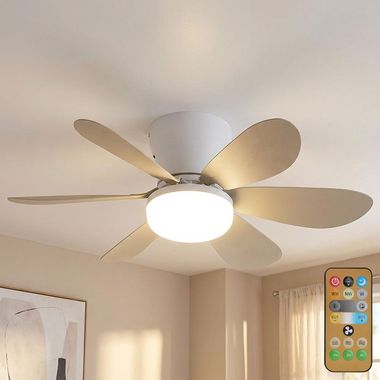
- LED ceiling fan, dimmable, CCT, UVC, app control, D 58 cmDelivery 1-3 days
Quiet fans – for everyday use and at night
Warm summer days are lovely – but indoors, the heat can quickly become uncomfortable. The air feels stagnant, it’s harder to concentrate, and even at night, a restful sleep is often out of the question. A fan can provide noticeably greater comfort here. However, if it runs constantly with a loud hum or rattling noise, the desired cooling quickly becomes a new source of disturbance. Particularly in the bedroom or home office, it is therefore worth looking for a model that is as quiet as possible.

Why a quiet fan makes sense
A fan does not lower the room temperature directly. Instead, it circulates the air, thereby making your skin feel more comfortable and cooler. However, just how pleasant this is in everyday life depends not only on the fan’s performance. The noise level also plays an important role.
A steady, quiet operating noise is much less noticeable whilst working, watching TV or sleeping. In quiet rooms in particular, even a constant hum can be a nuisance. That’s why quiet fans are particularly useful in places where the appliance runs for several hours at a time.
A quiet fan for the bedroom
Quiet operation is particularly important in the bedroom. After all, the fan should be able to run at night without constantly disturbing your sleep. Models that can be set to a low speed setting and produce as little noise as possible are recommended. As a guide, levels of around 30 dB(A) or below are considered particularly quiet.
Night mode and timer
A special sleep or night mode is handy for night-time use. In this mode, the fan usually runs at a low speed or gradually reduces its output. This keeps the air moving without the fan operating unnecessarily loudly.
A timer is also useful. It allows you to set how long the fan should run. After the selected time, it switches off automatically – for example, once you’ve already fallen asleep.
Which quiet fan is right for you?
Choosing the right type depends on the layout of your room. Whilst some fans are designed to circulate all the air in the room effectively, other models focus on a direct airflow.
Table fan
The classic table fan is ideal for a desk. Despite their compact size, modern models offer surprisingly powerful performance whilst operating very quietly. Thanks to precise speed settings, the airflow can be perfectly adjusted to suit your current work situation.

Floor fan and tower fan
- A pedestal fan offers maximum flexibility. Thanks to its adjustable height and oscillation function, you can optimally control the cooling in larger rooms.
- Space-saving and elegant: a column fan is an excellent example of a space-saving solution. Due to their design, tower fans are often inherently quieter, as they utilise specialised roller or tangential fans which produce a more pleasant frequency spectrum than traditional blades, even at high speeds.

Ceiling fan
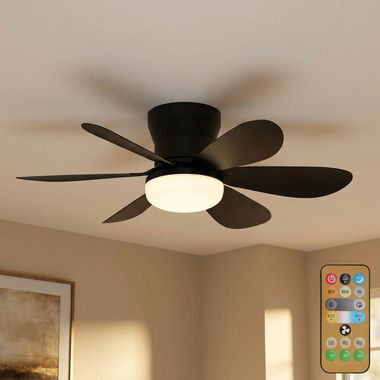
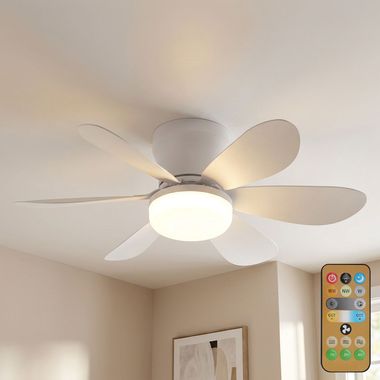
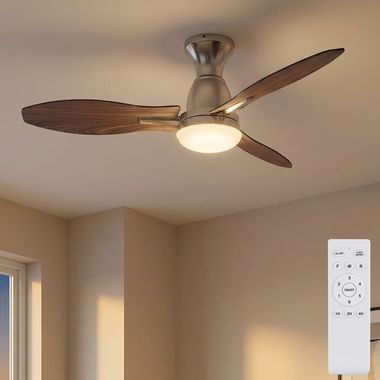
Ceiling fans distribute air evenly throughout the room and create a pleasant atmosphere. As they are mounted on the ceiling, they take up no floor space and are also suitable for smaller rooms. Many models offer several speed settings and can be easily adjusted to the desired airflow. Depending on the model, ceiling fans also combine air circulation and lighting in a single unit.
With forward and reverse settings, you can use the ceiling fan to suit the season and distribute the air in the room precisely as required.

What to look out for when buying
As well as the design, pay particular attention to the motor. DC (direct current) motors are now the standard for quiet operation: they are more energy-efficient, can be controlled more precisely and produce fewer mechanical vibrations than older AC motors. It’s always worth checking the dB rating – the noise level varies significantly depending on the speed setting.
Note: Fans do not lower the room temperature, but create a cooling effect on the skin through the movement of air.
A quiet fan for your home office
- Which fan is suitable for the bedroom?
Choose a model with quiet bearings and aerodynamic blade geometry. Look for a control system that can also be operated via remote control or an app, so you don’t have to adjust the fan manually. - Where should the fan be placed in the bedroom?
Position the fan so that it circulates the air throughout the room rather than blowing directly at you. This prevents draughts and ensures even cooling through air circulation. - Is a table fan quieter than a pedestal fan?
Not necessarily. The noise level depends on the type of motor and the shape of the blades, not primarily on the size. A high-quality pedestal fan can be quieter on a low setting than a cheap, noisy table fan.
Which features are useful?
For those with higher expectations, some brands also offer app connectivity, allowing you to monitor air quality in real time and control the fan intelligently – ideal for a healthy working environment.
Frequently asked questions
How many decibels (dB) should a quiet fan produce?
On a low setting, room fans producing under 40 dB are considered quiet. Particularly quiet models reach around 20 to 25 dB in night mode.
What does ‘sleep mode’ or ‘night mode’ mean?
In sleep or night mode, the fan runs at a low speed, thereby reducing operating noise. This allows you to enjoy a pleasant breeze at night whilst keeping noise levels to a minimum.
Are fans with direct current (DC motor) quieter?
Fans with DC motors usually operate particularly quietly and offer precise speed control. Depending on the model, the power consumption ranges, for example, between 2 and 30 watts.
How many blades are best in terms of noise levels?
Fans with five or more blades often produce a steady and pleasantly gentle airflow. However, the actual noise level also depends on the motor, speed and design.